
Trim and Molding That Completes Interior Spaces
Finished Carpentry in Tyler for unfinished wall edges, outdated trim profiles, and inconsistent interior detailing
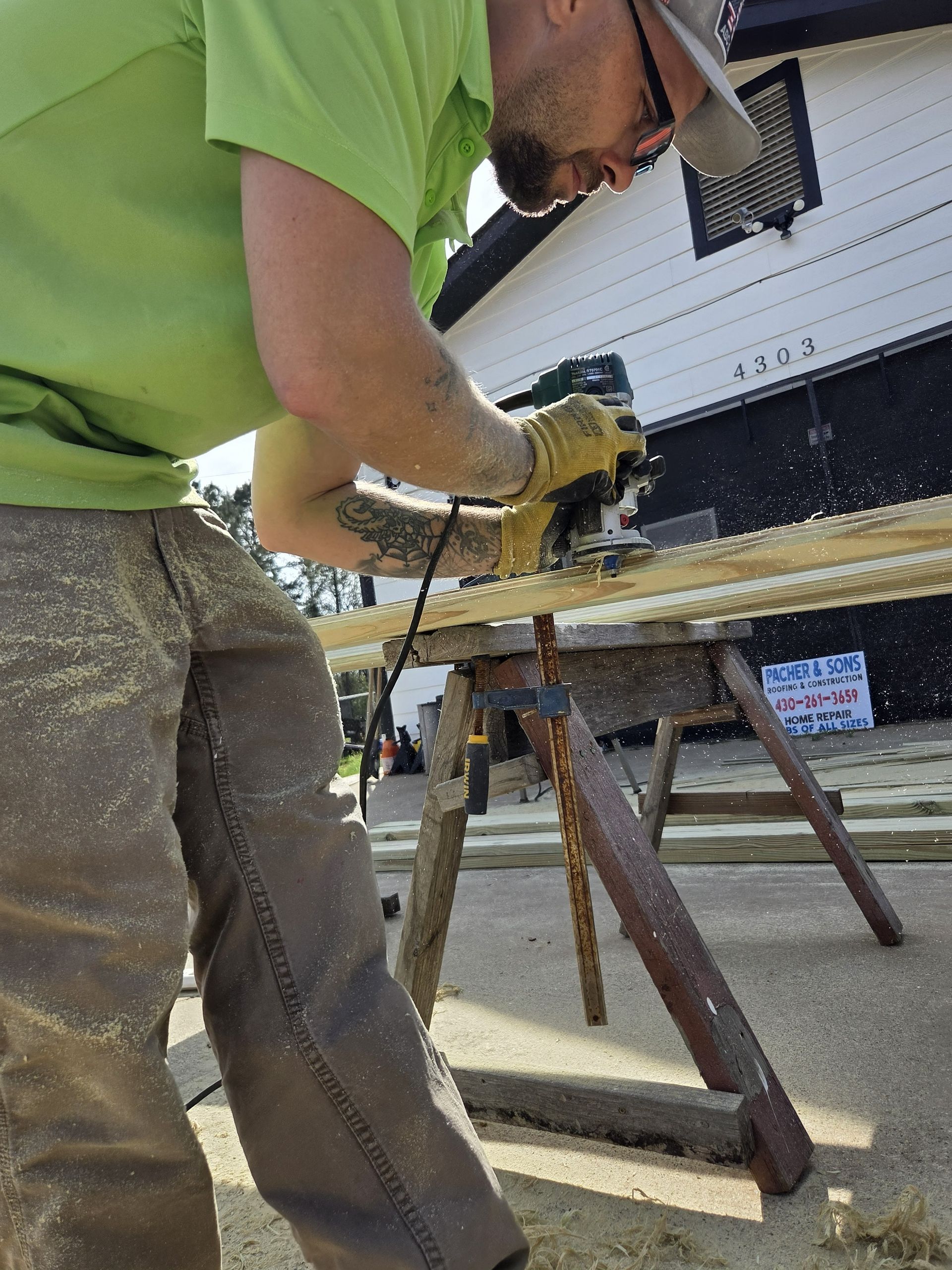
When baseboards show gaps along flooring transitions, door casings sit unevenly around frames, or crown molding profiles fail to align at corner joints, the visual finish of a room suffers regardless of paint quality or flooring condition. Pacher and Sons Roofing and Construction provides finished carpentry through a crew led by Zac and his father, combining generational experience with precision measurement and cutting techniques that ensure tight joints and consistent reveals across every installation in Tyler, Flint, Mineola, and surrounding areas. The work addresses both functional trim needs and custom interior features that add character to residential spaces.
Finished carpentry includes measuring and cutting interior trim, fitting pieces to account for wall irregularities and corner angles that rarely meet at perfect ninety degrees, and securing molding so it remains stable without gaps as the building settles or humidity levels shift. Each piece is selected for grain consistency and installed to hide fasteners while maintaining uniform spacing along walls and openings.
Arrange an on-site consultation to review trim profiles and custom carpentry options for your interior project.
How Precision Fitting Affects Long-Term Appearance
Trim installation begins with wall and ceiling assessment to identify where surfaces deviate from level or plumb, allowing for adjustments in cutting angles and backing placement before any piece is nailed in place. Corners receive coped or mitered joints depending on profile complexity, and each connection is tested for tightness before fastening to prevent gaps that widen over time as wood expands and contracts.
After installation, you'll see consistent reveal lines around doors and windows, baseboards that sit flush against both walls and flooring without visible separation, and crown molding that follows ceiling lines smoothly even where framing has settled unevenly. Paint adheres uniformly across joints, and trim remains secure without pulling away from walls during seasonal humidity changes.
The service includes removal of old trim if needed, surface preparation along mounting areas, custom cutting for non-standard angles or profiles, and finish installation with countersunk fasteners. It does not include drywall repair beyond minor patching, painting, or structural modifications to door frames or window openings.
Common Questions About Interior Trim Work
Homeowners often want to understand how trim choices affect both appearance and long-term performance, especially when matching existing profiles or adding custom features.
What makes trim joints stay tight over time?
Proper coping at inside corners and accurate miter cuts at outside corners create mechanical interlocks that resist separation as wood moves with humidity changes, while gaps left by rushed cuts widen visibly within months as seasonal expansion and contraction cycles repeat.
How does wood selection affect trim durability?
Primed finger-jointed pine offers stability and paintability for standard profiles, while solid hardwoods like poplar or oak provide better resistance to dents and dings in high-traffic areas where baseboards and door casings face repeated impacts from furniture and foot traffic.
When should custom trim be used instead of standard profiles?
Custom milling becomes worthwhile when matching historical details in older homes, creating transitions between rooms with different ceiling heights, or adding visual interest through layered profiles that standard stock dimensions cannot replicate.
What preparation ensures trim installation goes smoothly?
Walls must be finish-painted or primed before trim is installed, flooring should be complete so baseboards can be scribed to actual floor height, and door frames need to be set and shimmed plumb so casings align correctly on both sides.
How is finished carpentry priced compared to basic trim installation?
Detailed work involving custom profiles, complex angles, or intricate fitting around architectural features requires more labor time and material waste than straightforward baseboard or casing installation, which affects overall project cost based on the level of craftsmanship required.
The multi-generational approach at Pacher and Sons Roofing and Construction ensures that interior carpentry maintains the attention to detail necessary for trim work that enhances rather than detracts from finished spaces. Discuss your carpentry needs to explore options for your home's interior detailing.